Supporting resilient Diamond Open Access communities: Highlights from PUBMET 2026
Last month, the European Diamond Capacity Hub (EDCH) participated in the PUBMET 2026 conference in Zadar, Croatia, an event dedicated to bringing together researchers, publishers, librarians, infrastructure providers and policymakers to discuss how Diamond Open Access (OA) communities can shape the future of open scholarly communication.
The conference was an excellent opportunity for us to present our work supporting coordination across the European Diamond OA ecosystem, highlight the role of National Capacity Centres (NCCs), and introduce the work of the AEGIS-OA project.
Connecting European coordination with local communities
A central theme of the EDCH’s participation was the relationship between European-level coordination and the communities working on Diamond OA at national and regional levels.
During the session on Diamond Open Access Publishing and Communities, Karla Avanço, EDCH Skills & Competences Task Force co-lead, presented “From Fragmentation to Coordination: The European Diamond Capacity Hub and the National Capacity Centres.” The presentation explored how the EDCH and its network of NCCs can help connect shared European approaches with the specific needs and realities of local communities.
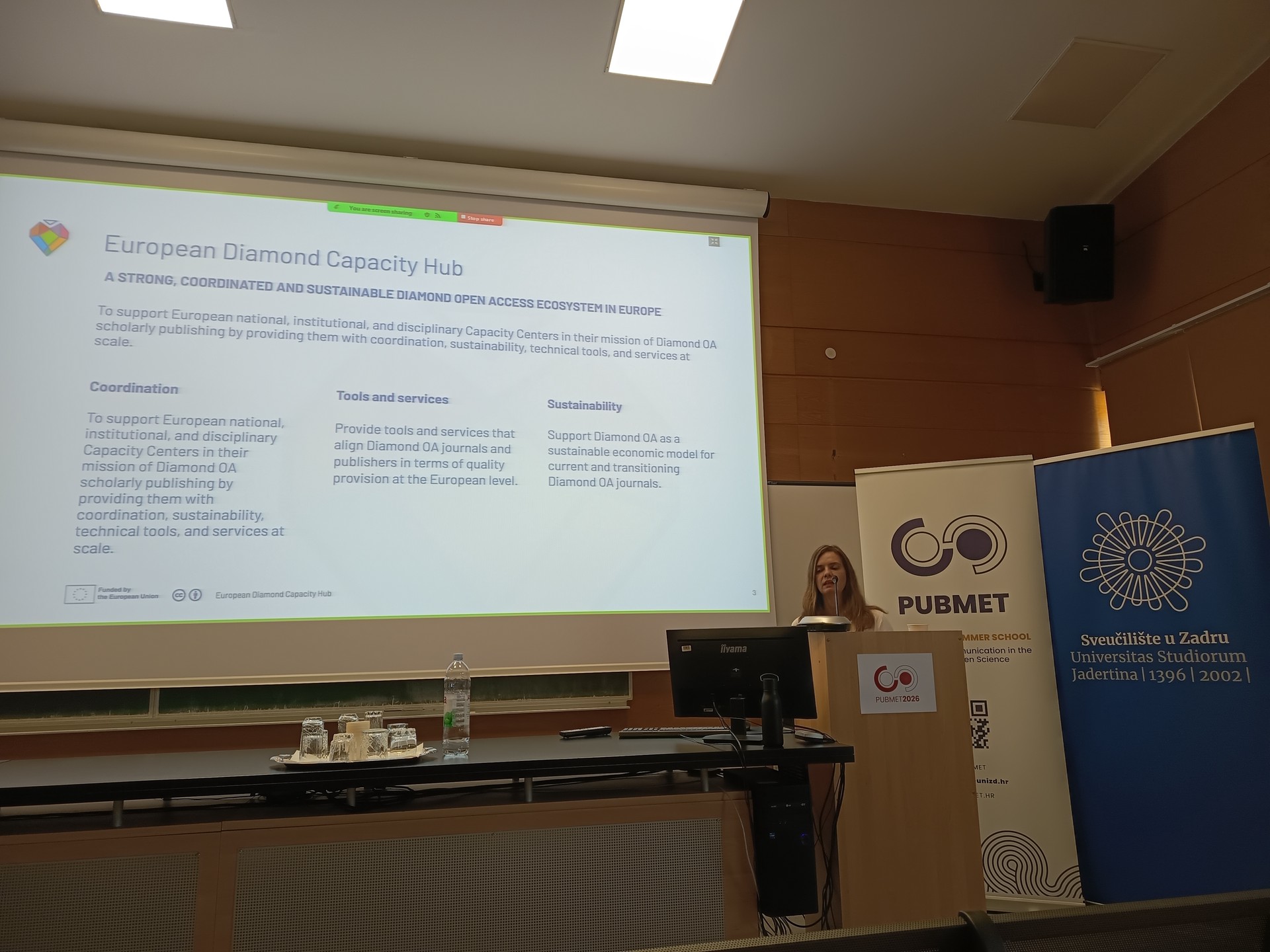
NCCs play an important role in this model by providing national and regional support, facilitating knowledge exchange and helping communities navigate the practical challenges of Diamond OA while aligning quality assurance, best practices, and coordination between European countries.
The growing NCC network also illustrates the diversity of Diamond OA ecosystems across Europe. Diamond OA communities operate at the national level within different policies, funding and institutional contexts, making it important to balance shared approaches with the flexibility needed to respond to local contexts.
Exploring ownership and governance in scholarly publishing
Questions of ownership and governance were another important part of the conference programme. EDCH Co-coordinator Johan Rooryck, together with Milica Ševkušić and Sofie Wennström, addressed these questions at the workshop “Whose journal is it anyway? Workshop on journal ownership.” The workshop explored questions around who owns scholarly journals, how ownership can shape publishing practices, and what community ownership can mean in the context of Open Science.
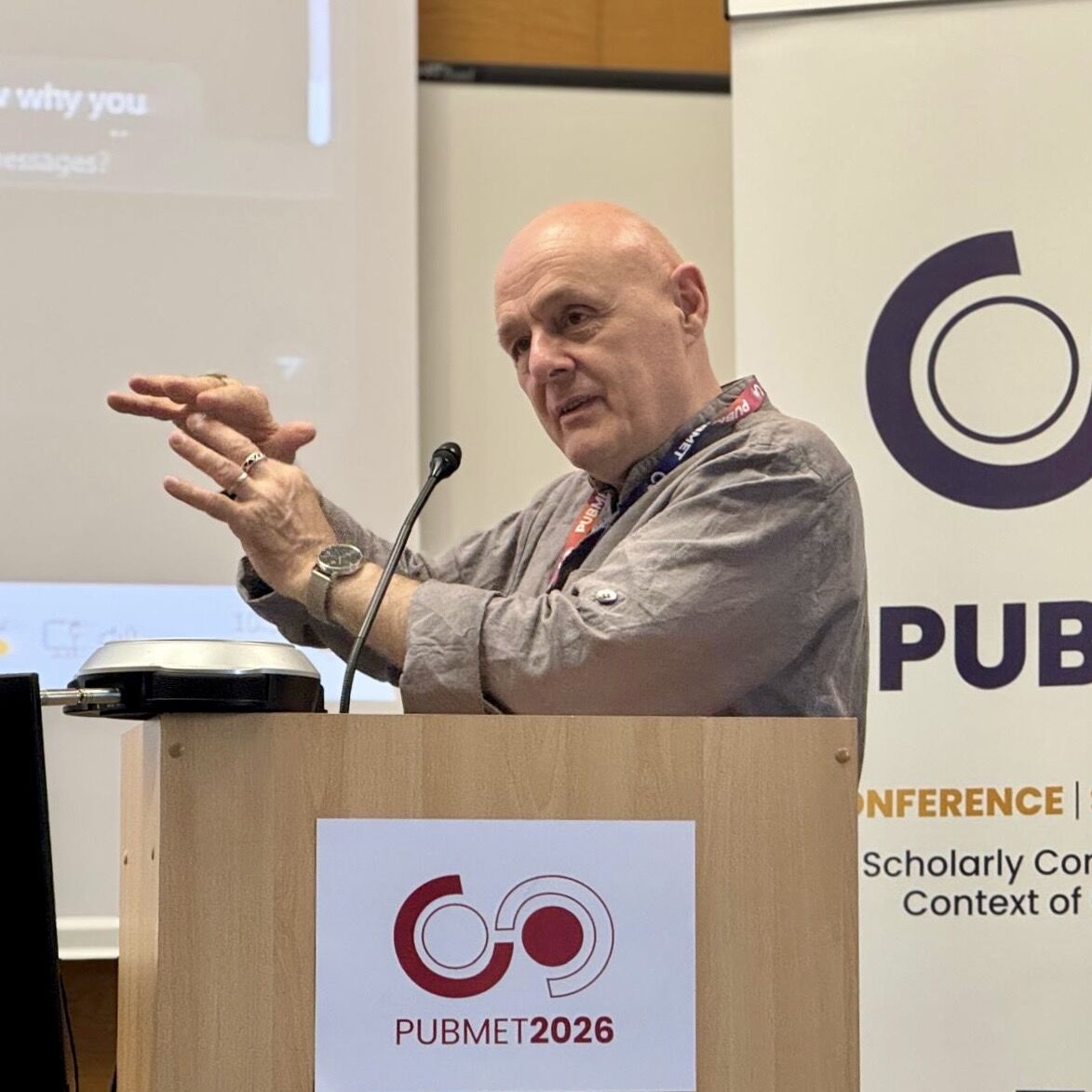
These questions are closely connected to Diamond OA, where ownership, governance, sovereignty, and control of publishing infrastructure are important elements of building sustainable community-led publishing models.
The workshop also provided an opportunity to consider how Diamond OA journal communities can retain greater agency over the publishing structures they rely on and how governance models can support the long-term sustainability of scholarly communication.
Putting Diamond OA into practice through AEGIS-OA
PUBMET 2026 also provided an opportunity to introduce the AEGIS-OA project, which builds on the foundations established through DIAMAS, CRAFT-OA and the EDCH.
The project was represented through a poster, “AEGIS-OA: Advancing Diamond Open Access Publishing in Europe,” presented by Karla Avanço. The poster was part of the conference’s dedicated session on Diamond Open Access Publishing and Communities.
AEGIS-OA aims to further strengthen and operationalise the European Diamond OA ecosystem by expanding EDCH services and support for publishers, tool and service providers and other key stakeholders. The project also broadens the scope of this work to include Diamond OA books, while strengthening areas such as metadata quality, bibliodiversity, workflows, funding approaches and collaboration across the ecosystem.
A growing conversation around Diamond Open Access
The strong presence of Diamond OA at PUBMET 2026 reflected the growing diversity of initiatives and approaches being developed across Europe.
The Diamond OA sessions brought together contributions on national coordination, journal certification, institutional publishing, researcher engagement and established Diamond OA programmes.
This diversity representation is crucial as Diamond OA communities work within different institutional, national and disciplinary contexts, while sharing common challenges around sustainability, infrastructure, funding, governance and capacity.
Creating spaces where these experiences can be shared is therefore an important part of strengthening the wider ecosystem.
Looking ahead
PUBMET 2026 reinforced the importance of creating stronger connections between the people, organisations and infrastructures that make Diamond OA possible.
For the EDCH, this means continuing to strengthen collaboration across the NCC network, develop services that respond to community needs, and create opportunities for knowledge exchange across Europe.
Through the EDCH and the AEGIS-OA project, we will continue working with Diamond OA communities to strengthen coordination, capacity and shared infrastructure, while supporting publishing models that remain open, sustainable and community-led.